
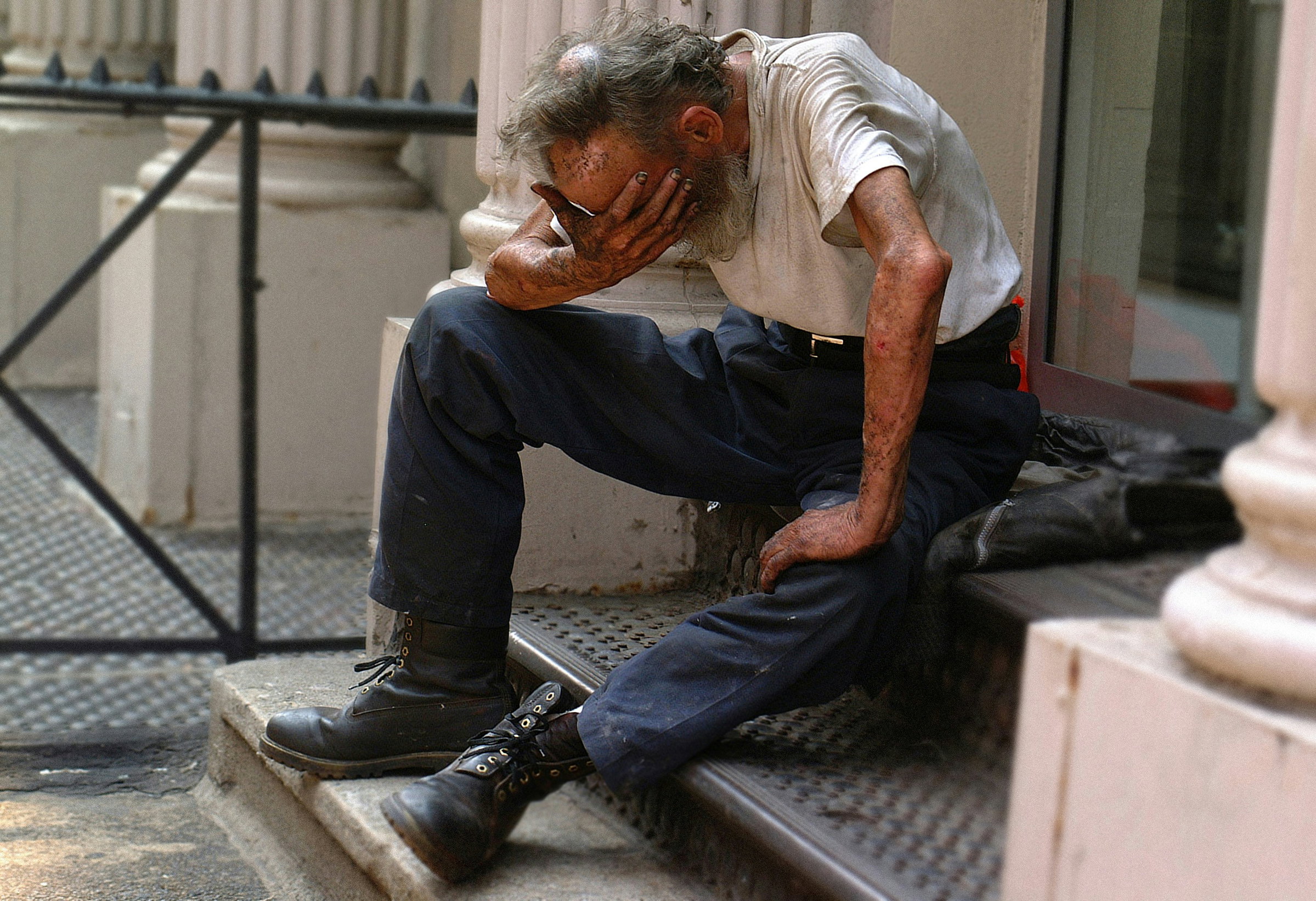

When Hoping Hurts Too Much
There’s a kind of exhaustion that only people who have tried and failed many times understand.
It’s not laziness. It’s not apathy. It’s the specific, bone-deep weariness of someone who wanted to believe things could change—who actually tried—and got burned enough times that hoping itself started to feel dangerous.
I’ve sat across from people in that place. You probably have too. And you can hear it in the way they talk:
“I’ve tried everything.” “Nothing works for me.” “You don’t know what I’ve done.” “It’s been too long.”
These are not the words of someone who stopped caring. They’re the words of someone who cared so much, for so long, that they finally ran out.
And that—right there—is exactly who the resurrection was made for.
Look at Who Was at the Tomb
We have a tendency to read the Easter story through a triumphant lens. Resurrection Sunday. He is risen. And all of that is absolutely true.
But look at who was actually there.
The women who came to the tomb that first morning didn’t come expecting a miracle. They came with burial spices. They came to anoint a corpse. Their hope had already been buried with Jesus on Friday.
Peter wasn’t sitting somewhere full of faith waiting for good news. He was somewhere processing the fact that he had denied Christ three times in a single night. If hope existed for him at all, it was buried under layers of shame he had every reason to carry.
And Thomas—we call him “Doubting Thomas,” but I think “Burned Thomas” is more accurate. “Unless I see… I will not believe.” That’s not philosophical skepticism. That’s a man protecting himself from being hurt again by something he wanted too badly.
These are the people Jesus appeared to. Not the confident. Not the ones who held it together. The grieving, the ashamed, and the ones who had already stopped believing.
That detail is not incidental. It tells us something important about who resurrection hope is actually for.
The Hope That Doesn’t Disappoint
When we use the word “hope” in everyday English, we usually mean something like “wish.” “I hope it doesn’t rain.” It’s tentative. Uncertain. We’re not counting on it.
Biblical hope is a completely different thing.
Romans 5:5 says hope “does not put us to shame.” The Greek behind that phrase carries the idea of being exposed, humiliated—proven to have trusted in something that let you down. Paul is saying: this hope will not do that to you. It cannot disappoint, because it isn’t grounded in your ability to maintain it. It isn’t grounded in your track record, your consistency, or your feelings on any given Tuesday.
It’s grounded in an empty tomb.
The resurrection is the evidence that God keeps promises that looked, from every human angle, impossible to keep. A dead Messiah was a contradiction. A sealed tomb was a closed case. And then Sunday came.
If God can do that, He can do something in your life.
What Burned-Out People Actually Need
Here’s something I’ve learned: cheap optimism makes things worse for people who have been burned by false hope.
“Just believe!” “This time will be different!” “God has a plan for you!” These things may all be true. But said carelessly to someone whose hope has been used against them, they land like bait. The person shuts down. They’ve heard it before.
What burned-out people need is not more enthusiasm. They need a reason to hope that exists completely outside of themselves—something that doesn’t depend on their ability to sustain it, because they already know they can’t.
The resurrection is exactly that kind of reason. It’s not a promise that things will feel better if you try harder. It’s a historical event—objective, witnessed, recorded—that demonstrates God can do things that look, from the inside, completely impossible.
You don’t have to generate hope. You have to encounter the One who is its source.
Jeremiah’s Prescription for Hopelessness
Lamentations 3 is one of the darkest passages in Scripture. Jeremiah describes affliction, bitterness, being driven into darkness. He even says, “My splendor is gone and all that I had hoped from the LORD.”
He uses the word hopeless.
And then, in one of the most remarkable pivots in the entire Bible, he says: “Yet this I call to mind and therefore I have hope.”
Not “I found something to feel better about.” Not “I summoned the courage to try again.” He called something to mind. He deliberately turned his attention toward what he knew to be true about God—that His compassions never fail, that they are new every morning.
This is the biblical prescription for hopelessness. Not a feeling. A remembering. An act of the will that chooses to orient toward the character of God rather than the failures of the self.
And here’s the thing about that: it’s very hard to do alone. Which is exactly why community matters so much. A Freedom That Lasts chapter exists partly to be the community that calls things to mind for you when you can’t hold onto them yourself—through worship, testimony, Scripture, and people who refuse to give up on you.
For the Pastor
The person who walks into your church having given up on hope is not a problem to manage. They are an opportunity for the resurrection to become visible.
Peter came back from shame. Thomas came through doubt. The women came through grief. None of them were argued back into hope—they encountered a Person. The risen Christ met each of them where they were.
Your church can be the place where that encounter happens today. Not by replacing Jesus, but by being His body—the tangible community through which He works in the world. That’s what a Freedom That Lasts chapter makes possible. Learn more at freedomthatlasts.com.
📖 Next Week: Part 4 — Becoming Witnesses of Transformation. Resurrection hope isn’t meant to be kept. It’s meant to be shared. | Start or find a Freedom That Lasts chapter at freedomthatlasts.com/Get-Started.
